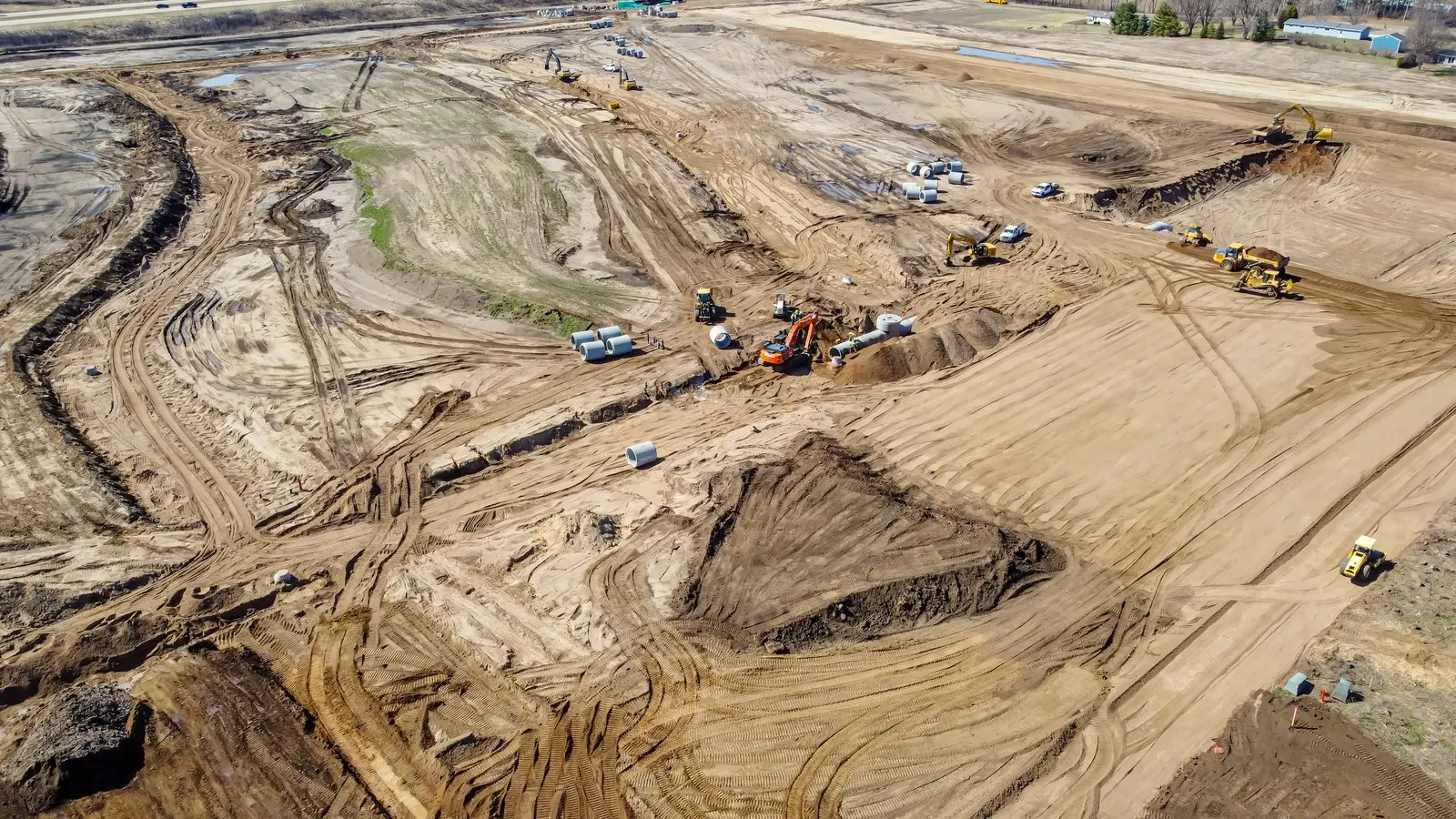
Every new estate starts the same way. Before there is a slab, a frame or a front door, there has to be a road, a stormwater line, a sewer connection and power to the boundary. Until those are in, a rezoned paddock is just a paddock.
That reality is now at the centre of the housing debate in New South Wales, and it is a lesson that applies well beyond Sydney.
What's being proposed
On 27 October, Local Government NSW called on all parties to back a $5 billion interest-free infrastructure loan scheme ahead of the March 2027 state election. Under its "Unlocking Homes" proposal, councils would borrow to build essential local infrastructure such as roads, drainage and footpaths sooner, and repay the loans through developer contributions as development proceeds.
The plan also proposes $3 billion upfront for state and regional infrastructure, to be recovered through the existing Housing and Productivity Contribution, and a reform allowing councils to use developer contributions for community facilities such as libraries, childcare centres and swimming pools.
LGNSW says up to 70,000 potential new homes across eight Western Sydney council areas could be unlocked. It notes that about 49,300 new homes were completed across NSW in 2025–26, but that new housing construction starts fell by 5.5% in the June quarter.
The Urban Developer reported on 29 October that UDIA NSW has aligned with councils on the core issue, though with a smaller ask: $500 million to facilitate interest-free loans for councils, plus $2 billion for a Housing Infrastructure Acceleration Fund. UDIA NSW also wants the cap on works-in-kind removed, allowing developers to deliver agreed infrastructure rather than make cash contributions, and the removal of minimum lot sizes in new residential zones.
The chicken-and-egg problem
LGNSW President Darcy Byrne summed up the issue: "Councils often need to deliver essential infrastructure years before collecting sufficient developer contributions to pay for it. It's a classic chicken-and-egg problem. We can't build homes without infrastructure, but can't fund infrastructure until development gets under way."
LGNSW's own case studies show the scale. At Schofields in Sydney's north-west, it said an $85 million infrastructure package would support more than 5,000 homes, and that without accelerated investment up to 3,500 homes could be deferred by about seven years.
A developer's view
For a land developer, this is not abstract policy. Infrastructure timing shapes every stage of a project: when civil works can start, when titles can be issued, and when buyers can finally build.
Three things stand out.
Rezoning is only the first step. Planning reform creates capacity on paper. It is the trunk infrastructure, the roads, water, sewer and power, that converts that capacity into lots people can live on. Policy that stops at zoning leaves the hardest part unfunded.
Delay is a cost in itself. Cotality's Cordell Construction Cost Index recorded a 1.0% rise in national construction costs in the September quarter and 3.2% over the year, with Cordell's John Bennett saying expectations of sustained cost easing "may have been short-lived". When a project waits years for a trunk connection, every one of those cost increases lands before the first lot is sold.
Letting developers build works-in-kind makes sense. Teams that already run their own earthworks, roads and services can often deliver agreed infrastructure as part of the estate itself. Removing caps on works-in-kind would let more of that happen, with councils and developers working to one program rather than waiting on each other.
The bottom line
UDIA NSW chief executive Stuart Ayres said: "Feasibility must be central to housing policy. It determines whether the capacity created through reform becomes new housing supply."
From where we stand, that is exactly right. More homes come from more serviced land, delivered on time. Whichever way the NSW election goes, the parties that fund roads before rooftops will get the most homes built.
At Centurion Global, our own team takes each estate from the first survey peg to the sealed road. We know that the homes families live in for generations begin with the infrastructure no one sees.
Sources
- Local Government NSW, $5 billion infrastructure plan could unlock tens of thousands of new homes across NSW, 27 October 2026: https://lgnsw.org.au/Public/Public/Media-Releases/2026/1027-plan-to-unlock-new-homes.aspx
- The Urban Developer, Councils, Developers Unite for NSW Infrastructure Push Ahead of Poll, 29 October 2026: https://www.theurbandeveloper.com/articles/council-developers-unite-for-nsw-infrastructure-push-ahead-of-poll
- Cotality, Renewed momentum signals a settling construction sector (Cordell Construction Cost Index, September quarter 2026), 21 October 2026: https://www.cotality.com/au/press-releases/renewed-momentum-signals-a-settling-construction-sector