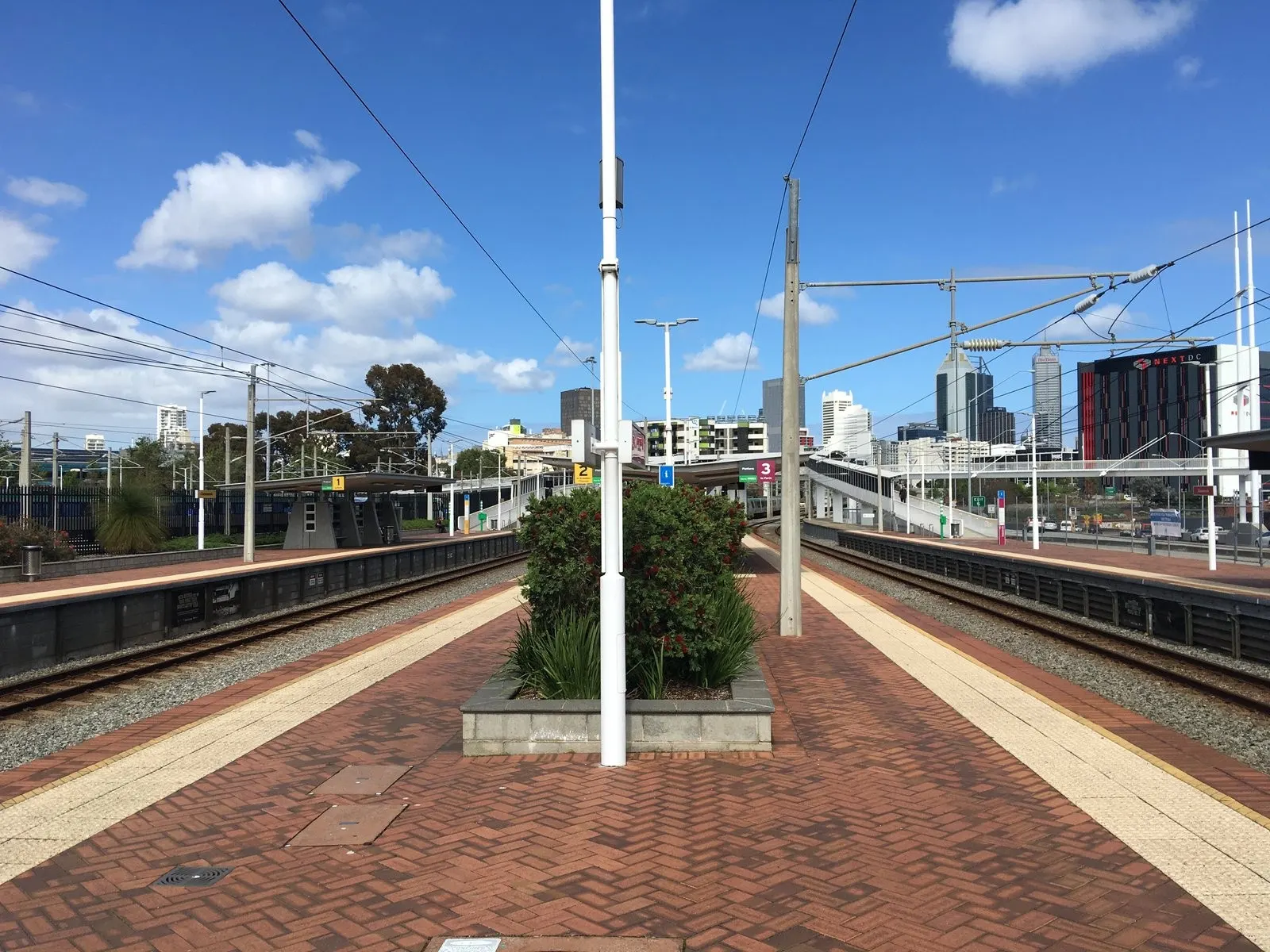

Building homes near train stations is one of the least controversial ideas in planning. Turning it into projects that actually start is harder. The rules around each station are often unclear, inconsistent from one council to the next, or both.
Western Australia has just put a firmer set of rules on the table. On 5 November, the state government released the draft Station Precincts Improvement Scheme for public consultation, covering eight station precincts across Perth: Bassendean, Carlisle-Oats Street, Claisebrook, Cottesloe, Glendalough, Morley, Mosman Park and Swanbourne. Planning for Redcliffe and Ballajura is progressing under separate schemes.
What the draft scheme proposes
According to the government's media statement, each precinct has a core area allowing higher density of up to 20 storeys, stepping down to a transitional frame area for medium density of two to eight storeys. The draft also proposes minimum density settings "to ensure land in these key precincts isn't underdeveloped".
The scheme sets out zoning, housing densities and building heights for each precinct, and the government describes it as a place-based approach that responds to local character, heritage and existing urban form. A draft Station Precincts Heritage Policy accompanies it, and existing local planning policies, including tree retention, can be given regard.
Planning and Lands Minister John Carey said the draft "gives communities, landowners and industry more certainty, by painting a clearer picture of where and how new development may occur".
The draft follows the approval of Station Precincts Improvement Plan No. 65 in July 2026. Consultation closes on 12 February 2027, the scheme is due to be finalised in mid-2027, and a further tranche of station precincts is expected to be announced in the new year.
Why it matters on the ground
One set of rules across eight precincts. For a developer, a consistent framework is worth almost as much as the height limit itself. Knowing that zoning, density and built-form standards are set in one scheme, rather than negotiated precinct by precinct, makes it easier to compare sites and price land with confidence.
Minimum densities change the land conversation. A height cap tells you the upside. A minimum density tells you what will not be approved. In core areas, owners hoping to build a low-rise project, or hold land for a few years with a modest scheme, may find that option narrows. That will shape how sites are valued and which buyers are interested.
Twenty storeys depends on site size. Taller buildings need workable floorplates, setbacks and access. Many lots around established suburban stations are small and held by different owners. In practice, the most valuable sites will often be those that can be assembled into a parcel large enough to use the controls.
A single public realm contribution. The government is also seeking feedback on a framework that would replace separate requirements for public open space, public art and community benefits with one public realm contribution. The WA Local Government Association said it will engage with councils to understand the implications. For developers, the appeal is predictability. The Urban Developer reported on 6 November that many WA councils require developers of major projects to contribute 1 per cent of the building cost to public art, so how a combined contribution is calculated will matter to feasibility.
Heritage and trees still count. Existing heritage listings are protected and local tree retention policies can be considered. Due diligence on any site will still need to look past the headline height.
The industry response
The Planning Institute of Australia's WA president, Cameron Leckey, welcomed the release and said new homes "need to be supported by the infrastructure, services and public spaces that make communities great places to live". WALGA president Mark Irwin said it is "critical community voices and local context are part of these discussions".
What to watch
The draft gives landowners and developers about three months to review the detail precinct by precinct and lodge submissions. The points worth testing are how minimum densities are applied to smaller lots, how the public realm contribution is calculated, and whether the controls in each core area can be delivered at today's construction costs. Clear rules are the starting point. Projects follow when those rules also stack up on a feasibility.
This article is general information only and does not take account of your circumstances.
Sources
- WA Government media statement (via Mirage News), "More Homes, Housing Choices Planned Near Stations", 5 November 2026: https://www.miragenews.com/more-homes-housing-choices-planned-near-stations-1772279/
- WA Government, "Have your say: planning for metro station precincts moves ahead", 5 November 2026: https://www.wa.gov.au/government/announcements/have-your-say-planning-metro-station-precincts-moves-ahead
- Build Australia, "WA government unveils high-density housing plan for METRONET precincts", 6 November 2026: https://www.buildaustralia.com.au/news_article/wa-government-unveils-high-density-housing-plan-for-metronet-precincts/
- WALGA, "Consultation now open for draft Stations Precinct Improvement Scheme", 6 November 2026: https://walga.asn.au/media-and-resources/latest-news/consultation-now-open-for-draft-stations-precinct-improvement-scheme
- Planning Institute of Australia, "From train stations to thriving neighbourhoods: The power of good planning", 5 November 2026: https://www.planning.org.au/pia/news-resources/articles/latest-updates/WA/From-train-stations-to-thriving-neighbourhoods.aspx
- The Urban Developer, "Friction Grows as Public Art Levies Jack Up Project Costs", 6 November 2026: https://www.theurbandeveloper.com/articles/friction-grows-as-wa-s-public-art-levies-jack-up-project-costs